Why European country shapes need close attention
The European set has 46 countries, many of them compact and close together. A few are recognized at once: the boot of Italy, the broken coastline and islands of Greece, the long Atlantic coast of Norway, and the island of Iceland. Many others only become clear when you compare them carefully.
Microstates such as Vatican City, Monaco, San Marino, Liechtenstein, and Andorra are enlarged to the same frame as Russia. You have to know their actual outlines, because size gives nothing away.
Countries with strong visual clues
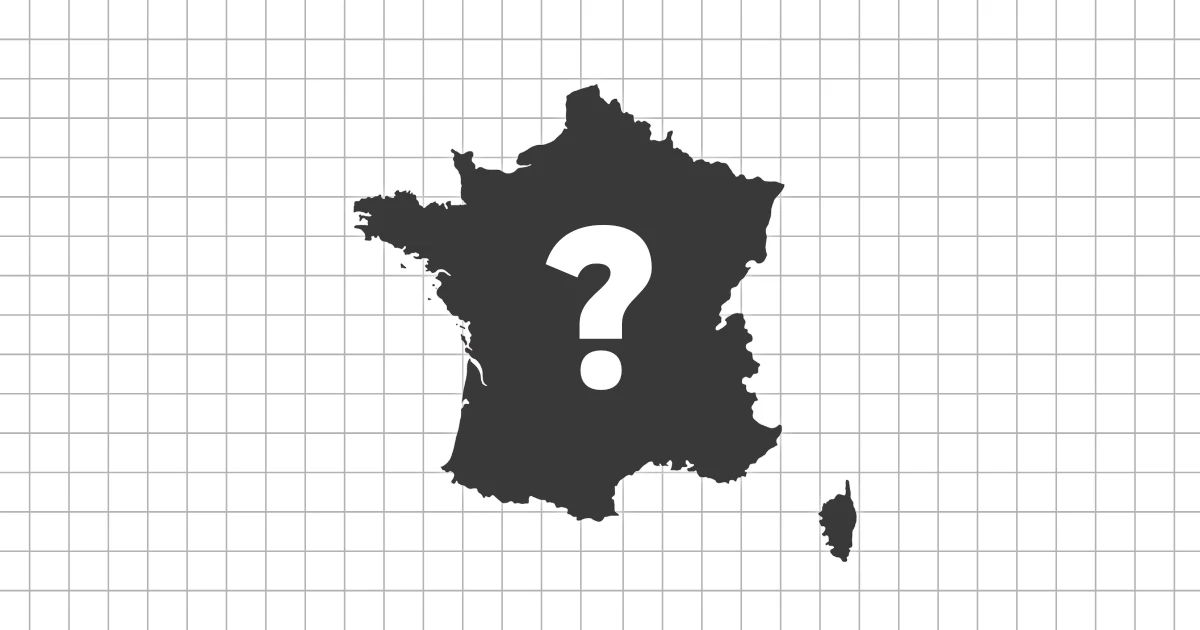
Portugal is a narrow rectangle on the Atlantic, and mainland France is often called "the Hexagon" because of its six-sided shape. Croatia curves around Bosnia and Herzegovina like a crescent, and Denmark combines the Jutland peninsula with a group of islands.
These shapes make good anchors. Once they are familiar, it is easier to compare the less obvious outlines around them.
Harder groups to separate
The Balkans are the hardest part. Serbia, Bosnia and Herzegovina, Montenegro, Kosovo, North Macedonia, and Albania are close together and have complex borders. The three Baltic states, Estonia, Latvia, and Lithuania, also look alike until you compare them side by side.
- Start with coastlines: Italy, Greece, Norway, Portugal, Croatia.
- Then move on to islands and microstates: Iceland, Ireland, Malta, Cyprus, Monaco, San Marino.
- Finally, practice compact inland shapes: Hungary, Slovakia, Czechia, Serbia, Moldova.
Best way to practice Europe
Begin with 4 choices and the 15-second timer to build quick recognition. When the coastal countries feel easy, switch to typing mode and focus on the inland countries. Europe rewards small details, so turn the timer off when you want to study the shapes slowly.