Emoji quiz overview
Emoji Country Quiz is a fast, fun geography game where you guess the country from a set of emojis. Some questions use cultural clues (food, landmarks, animals), while others use sound-based hints, English words that resemble a country name. Either way, the goal is the same: recognize the country and learn why it fits.
This is a pattern game, not a trivia test. You are training your brain to connect symbols to places, either by meaning or by sound. That mix keeps the quiz approachable while still delivering "aha!" moments.
Why emoji clues work
Emojis compress a lot of information into small symbols. A single food, animal, or landmark can narrow the answer faster than a paragraph of text.
The quiz uses common, globally recognizable symbols so the logic is accessible even if you have not memorized trivia.
Two clue styles
1) Meaning clues (culture, symbols, identity)
Many emojis work like mini-postcards: food, famous objects, animals, or visual symbols that suggest one country. Pick the strongest signal instead of trying to justify every emoji. Ask yourself: "If I had to describe this emoji set in one phrase, what would it be?"
2) Sound clues (read the emojis like words)
Some questions are based on pronunciation. Read the emoji as an English word (or a simple sound), then connect it to a country name. For example, a chili emoji can be read as "chili," which sounds close to Chile. These are not perfect puns, just close enough to feel fair and memorable.
How to solve without overthinking
- First decide: meaning clue or sound clue
- If meaning: pick the strongest symbol and commit
- If sound: say the emoji words out loud and listen for the country name
- If stuck, do not guess randomly, use the explanation and learn the pattern
The point is not to get everything on the first try. The point is to build a reliable habit: decide quickly, then check why it was right or wrong. That feedback loop improves your score fastest.
How the clues are chosen
Each emoji set is built around one anchor clue and one supporting clue. If you can find the anchor first, the answer usually becomes obvious.
When a clue is sound-based, the syllables are kept simple so the connection feels fair after you see the answer.
Tips for faster emoji reads
Build a one-line translation for each emoji set
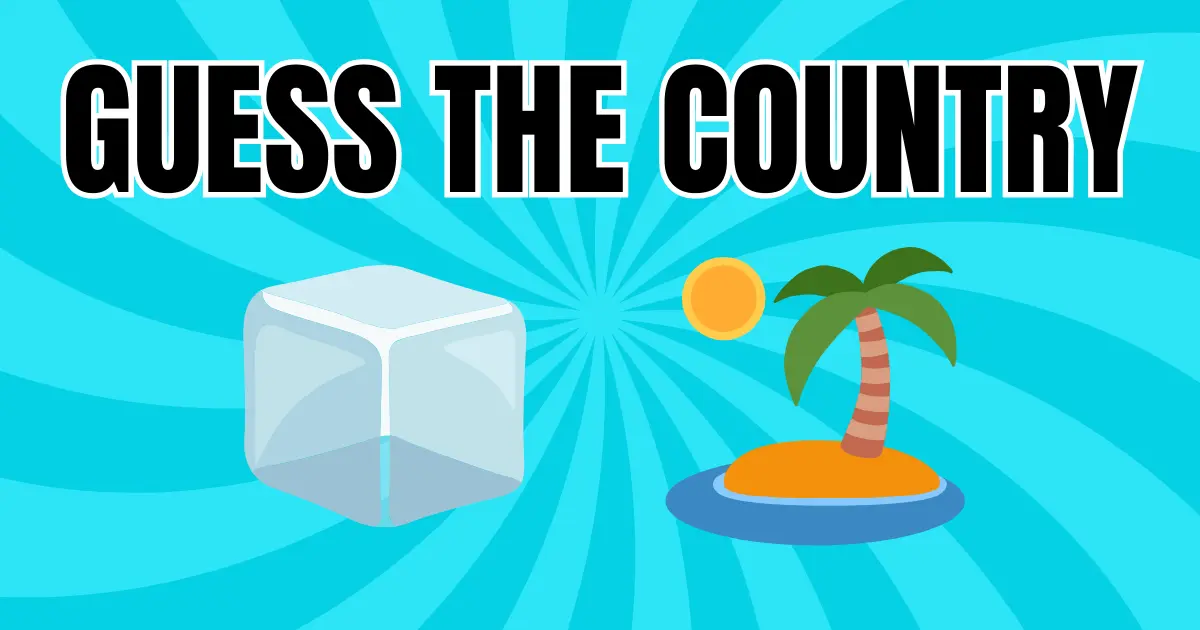
Treat each emoji set like a tiny sentence. Convert it into a one-line translation such as "temple + elephant + curry" or "ice + land." Once you can describe the emojis in words, the answer becomes easier to spot and remember.
For sound clues, focus on the main syllables
Do not force perfect pronunciation. Listen for the key syllables that match the country name. If the sound is close enough after you say it aloud, it is doing its job.
When multiple countries feel possible, pick one decisive checkpoint
Some emoji sets could suggest more than one place. In that case, choose one decisive checkpoint: a single emoji that feels most specific, or one sound that clearly matches a country name. One clear rule prevents second-guessing and stabilizes accuracy.
After you finish
When you complete the set, you will start interpreting emojis more strategically. Your eyes will look for the anchor clue first, the most informative symbol or the strongest sound. That skill carries over to other geography games too, like flags, capitals, and outlines.
If you enjoyed this quiz, try replaying it and aim to improve your speed while keeping your reasoning clean. The best way to level up is simple: learn one new pattern from each explanation, then test it again.
Video version on YouTube
Prefer to take this quiz in video format? Watch below!