Asia capitals map quiz overview
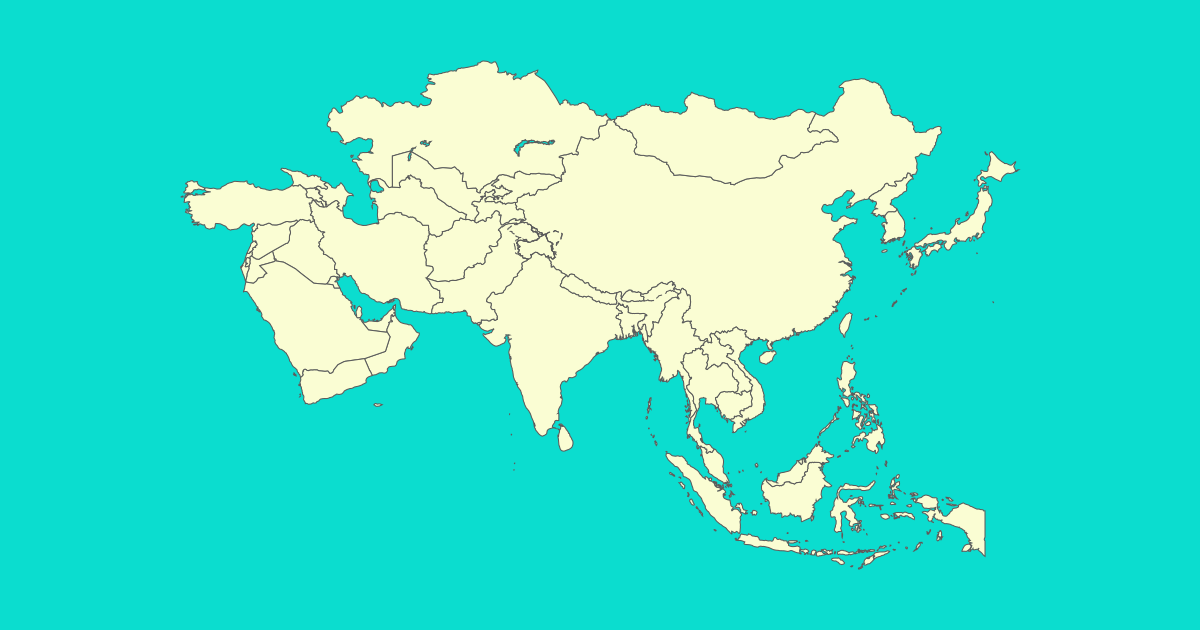
The Asia capitals map quiz covers capital cities from the Middle East, Central Asia, South Asia, East Asia, and Southeast Asia. The region is large, so the game rewards both capital recall and a strong sense of where each country sits.
Why Asia needs regional thinking
Asian capitals are easier to remember when you divide the map into smaller areas. Gulf capitals, Central Asian capitals, island-country capitals, and mainland Southeast Asian capitals each form patterns that are easier than one long list.
What you will practice
You will connect city names such as national political centers, island capitals, and inland capitals with the correct country shape. Some answers are large and easy to spot, while others require careful attention to compact countries and archipelagos.
Study tips
- Separate the Middle East, Central Asia, South Asia, East Asia, and Southeast Asia
- Use India, China, Japan, Indonesia, and the Arabian Peninsula as anchors
- Review island countries slowly before playing timed rounds
Avoiding common mistakes
Many mistakes happen when a capital is remembered only by sound. If two country names or capital names feel similar, pause and place them inside a subregion. The map will usually provide the missing clue.
When to use the timer
Use untimed rounds while building the regional framework. Once the major countries and subregions feel stable, the 15-second timer becomes a good way to train faster recall.