Advanced flag overview
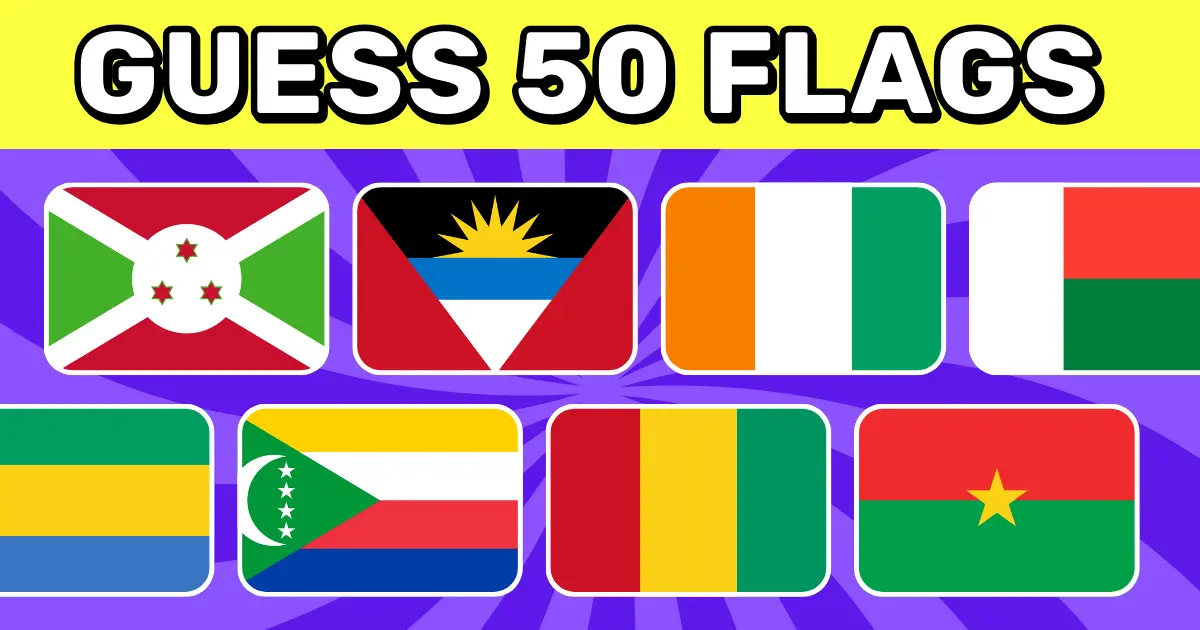
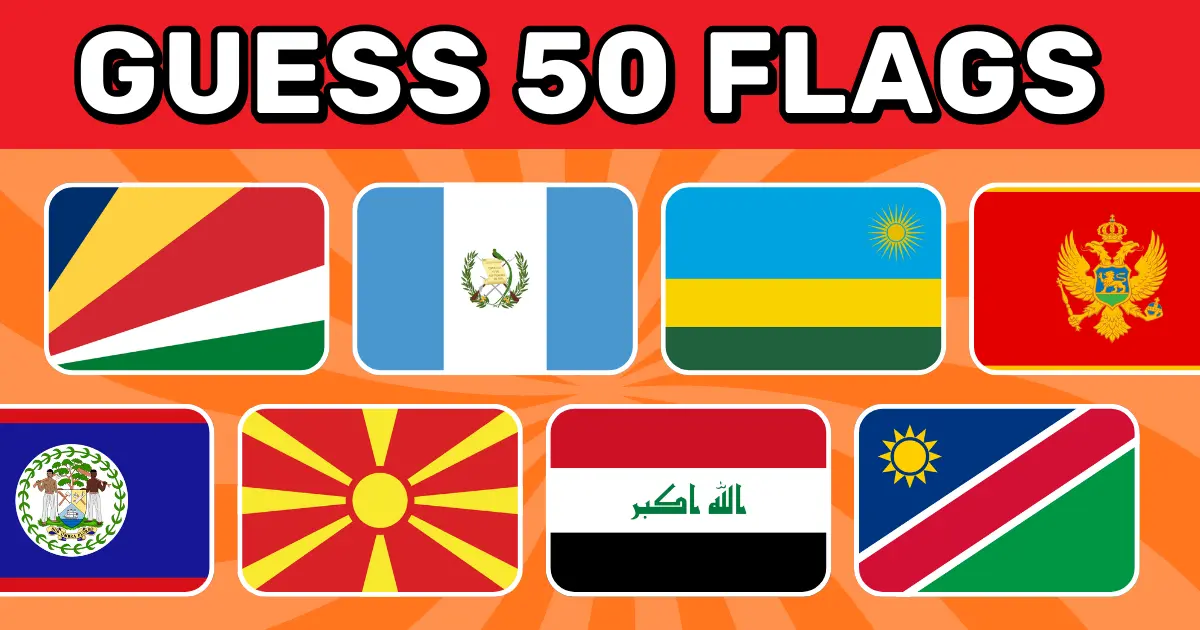
World Flags Quiz: Advanced focuses on regions where flags are less commonly seen, such as Africa, Latin America, Central Asia, and Oceania.
You may know the country names, but their flags are often unfamiliar at first glance.
At this level, familiarity no longer helps. The challenge is whether you can read the flag itself.
Why this set feels tougher
The advanced list includes flags with complex symbols and fewer shared regional templates. You cannot lean on simple patterns like tricolors or crosses.
Instead, you have to treat each flag as a full design and extract the main idea quickly.
What makes the jump in difficulty
The jump in difficulty at this stage is not accidental.
- There are few shared regional rules for color and layout
- Many designs no longer follow simple patterns like tricolors or crosses
- Flags often contain dense symbols with a lot of information
This is where pattern-based guessing stops working and careful visual reading becomes necessary.
What to focus on
Identify the main focal point
Instead of starting with colors, focus on what stands out most: a central emblem, an animal, a weapon, or a building. That dominant element usually defines the flag.
Treat symbols as condensed meaning
Animals, crests, weapons, and structures are not decoration. They compress a country's history, independence, and values into a single image. You do not need to memorize details, but you must notice when the symbol is the centerpiece.
Shift from comparison to identification
At the intermediate level, comparison was key. At the advanced level, ask "What is this flag?" rather than "Which one is it similar to?"
Strong asymmetry or a unique central symbol often provides enough information.
How to use this page
- Do not panic when the flag looks unfamiliar
- Start by reading the overall structure and main symbol
- Focus on what the flag is trying to express as a nation
Accuracy matters less than understanding how you reached your conclusion.
How to learn from mistakes
If you miss a flag here, focus on the dominant element you ignored: an emblem, a tool, an animal, or a color block. Write that down as a one-line cue.
Advanced progress comes from building these cues, not brute memorization.
What changes after finishing
After finishing this level, your way of seeing flags becomes more precise.
- You stop relying on color alone
- You read the entire flag as a single information unit
- You recognize flags as intentional designs, not just images
This skill goes beyond quizzes and reflects a deeper understanding of how countries visually represent themselves.
Next level
The advanced level is not just preparation. It is the step into the final challenge.
If you can read flags at this level, the expert stage becomes refinement rather than confusion.
Video version on YouTube
Prefer to take this quiz in video format? Watch below!