Country or Dependency Overview
At first glance, the world seems neatly divided into countries. Borders are drawn, flags are raised, and names are printed on maps. But once you look closer, the idea of a "country" becomes far less clear.
Some regions govern themselves, issue passports, and compete in international sports, yet are not legally independent. Others claim sovereignty but are recognized by only a handful of nations. This quiz explores those gray areas where geography, politics, and law intersect.
Why so many places feel like countries
Autonomy, identity, and everyday confusion
Many territories operate with a high degree of self-rule. They manage local laws, collect taxes, and maintain distinct cultural identities. For residents and visitors alike, daily life may feel no different from that of an independent state.
- Local governments with elected leaders
- Distinct languages, currencies, or legal systems
- Separate sports teams or international representation
- Historical borders that predate modern nation-states
These features often blur the line between what feels like a country and what is legally recognized as one.
Why the confusion persists
International law uses formal recognition, while everyday life uses practical autonomy. A place can feel independent without being fully recognized as a sovereign state.
That gap creates the gray zones this quiz explores.
What defines a country
Beyond flags and borders
In international relations, sovereignty is not based on appearance. It depends on recognition, constitutional authority, and participation in global institutions.
- Control over foreign policy and defense
- Recognition by other sovereign states
- Membership or observer status in international organizations
- Constitutional independence from another government
A place may satisfy some of these conditions while lacking others, which is why many regions exist in a permanent legal gray zone.
How this quiz challenges assumptions
Each question presents a region that is often mistaken for a country. Instead of asking you to recall trivia, the quiz invites you to evaluate status, recognition, and political structure.
The goal is not to trick you, but to reveal how often our mental map of the world oversimplifies reality.
Patterns you will start to notice
Recurring themes across the questions
- Former colonies that never became fully independent
- Territories tied to distant countries through historical agreements
- Regions with strong national identities but limited recognition
- Special administrative systems designed to preserve autonomy
Recognizing these patterns makes it easier to understand why similar cases appear in different parts of the world.
Who this quiz is for
This quiz is designed for anyone curious about how countries are defined, from students and travelers to long-time geography enthusiasts. Even experienced players often discover that their assumptions about sovereignty do not always hold up.
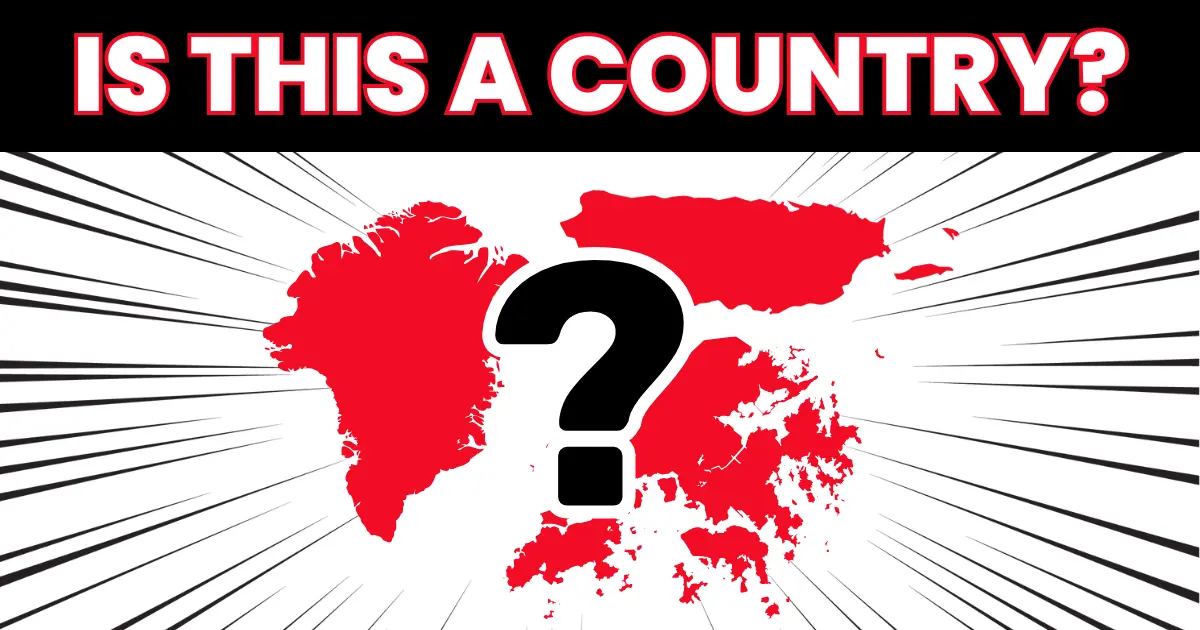
Start the quiz and see how many regions you can correctly classify. You may find that the question """Is it a country?""" has fewer clear answers than you expect.